Chelsea transfer history and Enzo Maresca's reign reveal costly signings, failed vision, and the unraveling of Stamford Bridge ambitions.
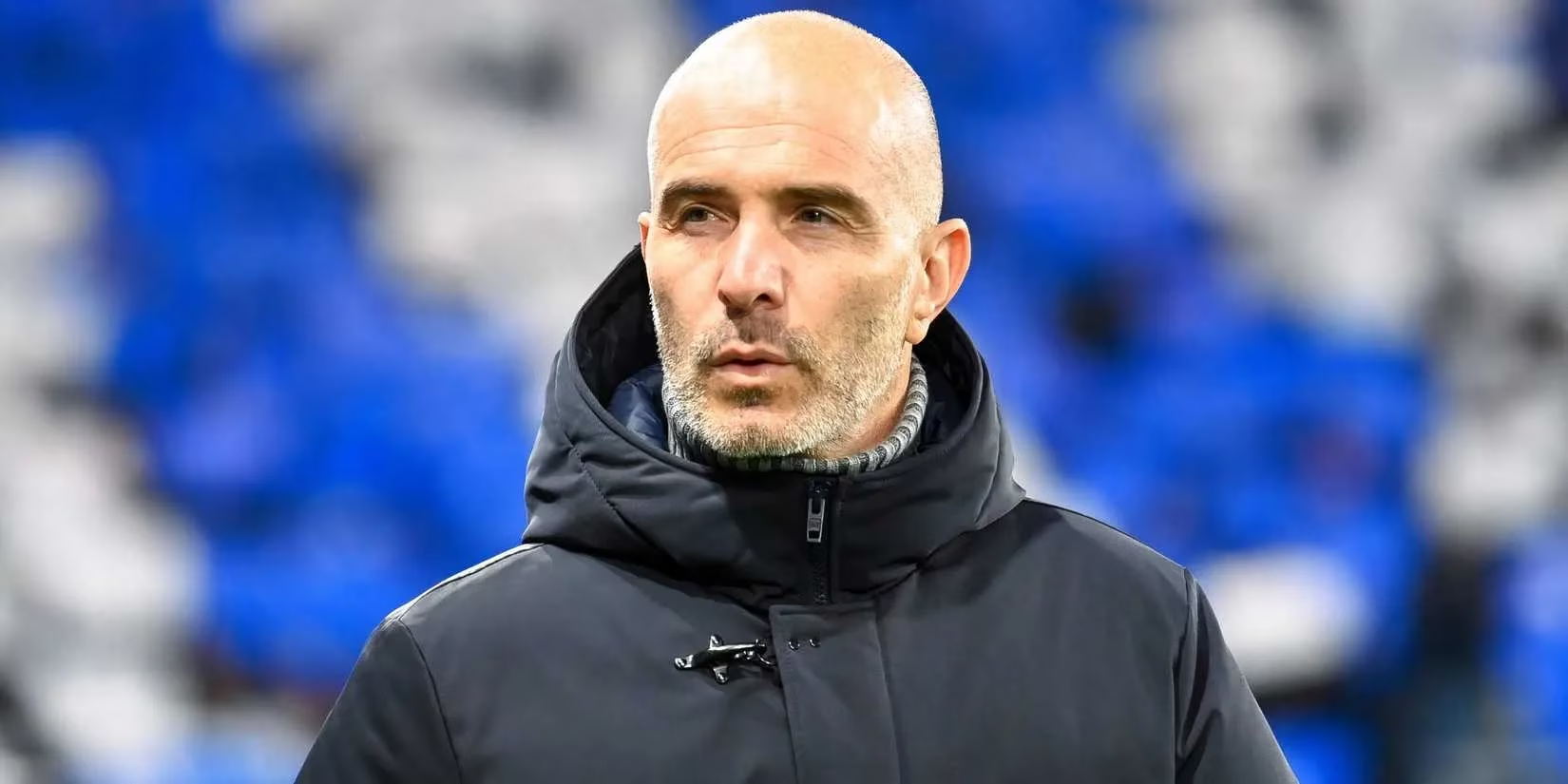
It was a cold January morning in 2026 when news broke that Enzo Maresca had walked away from Stamford Bridge. The Italian had delivered Champions League football and two trophies in his first season, yet the fracture behind the scenes had become irreparable. As supporters scrolled through their phones in disbelief, the real story was hiding in plain sight: a series of signings that had steadily eroded the manager’s faith in the club’s long-term vision. With just one win in their last seven matches, Chelsea were unravelling, and the transfer history of Maresca’s 18-month reign told a cautionary tale of modern football excess.
The strangest chapters began with those who never kicked a ball for the first team. Dario Essugo, Anselmino, Caleb Wiley, Omari Kellyman, Mamadou Sarr, and Kendry Paez all arrived with fanfare and seven-year contracts, then vanished into the loan labyrinth. They became ghost signings, draining resources while the squad cried out for immediate quality. Their absence from competitive action was a silent indictment of a recruitment philosophy that treated young talent like trading cards.
Then came the cascade of expensive misfires. Chelsea spent a king’s ransom on a backup goalkeeper who remained firmly behind the first choice—a bewildering move when Manchester United and Manchester City had acquired Senne Lammens and Gianluigi Donnarumma for similar fees. The wastefulness underlined how meaningless money had become under Todd Boehly’s regime. In the same vein, Renato Veiga arrived for several million pounds and was immediately shoved onto a conveyor belt of uncertainty. Would he ever get a real chance? The question felt rhetorical in a squad already groaning under the weight of its own numbers.
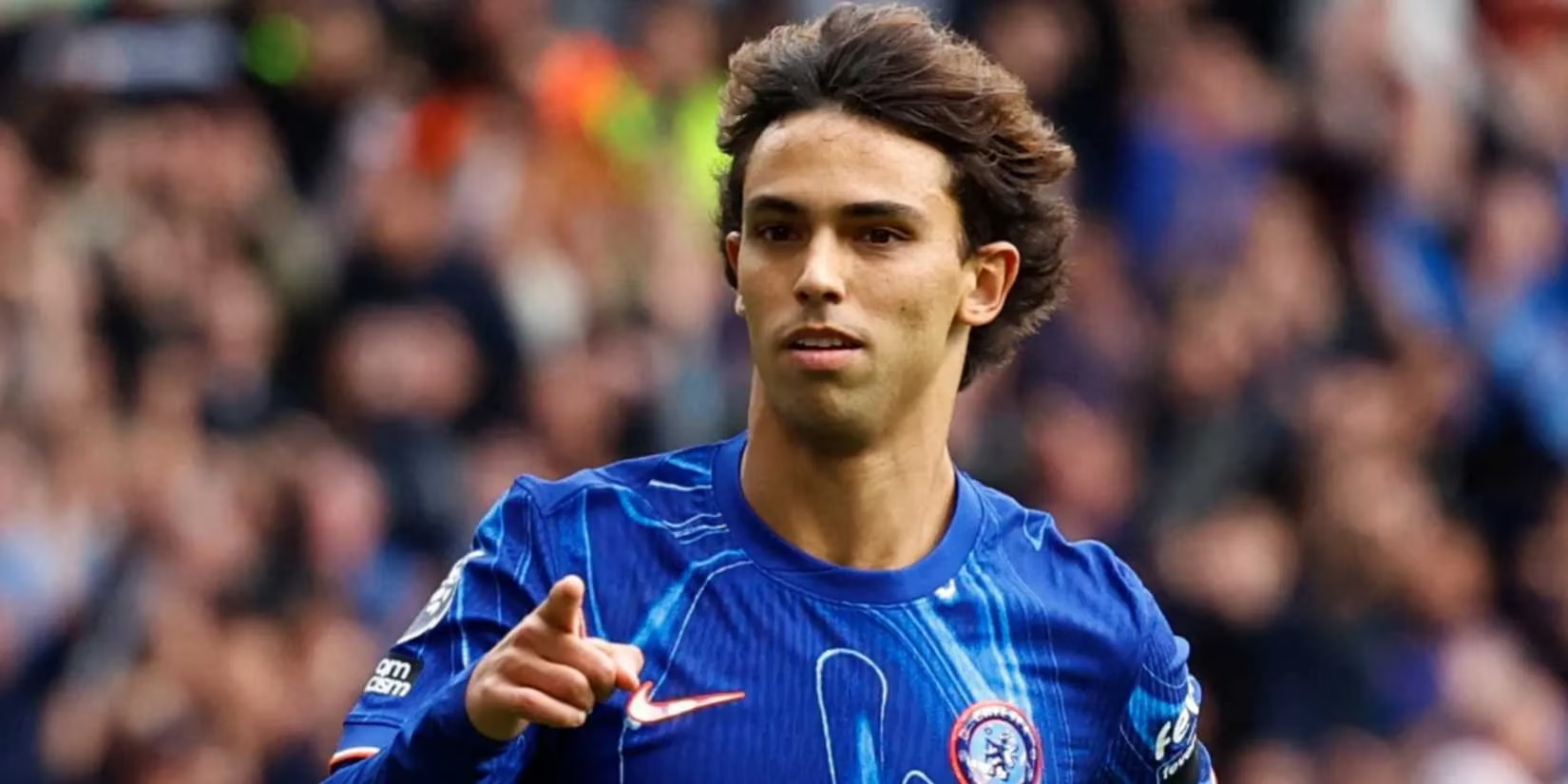
João Félix’s story was particularly painful. After a forgettable loan spell, the club still converted his stay into a £46.3 million permanent deal, clinging to the hope that he would finally ignite. Three goal involvements in 14 appearances later, he was sold to Saudi Arabia—a transfer that felt less like football strategy and more like a sunk-cost fallacy. One image summed up the fleeting illusion: Félix wheeling away after a goal at Molineux, his celebration hinting at a promise that never materialised.
Kiernan Dewsbury-Hall had followed Maresca from Leicester City like a trusted lieutenant, but his Chelsea career was confined to Europa Conference League cameos. He shone in that competition, yet was shipped to Everton after a single season—a decision that baffled those who saw his tireless work rate. Marc Guiu at least hovered around the first team, even scoring in his lone Champions League appearance, but his long-term place remained a question mark. If he too disappeared on loan, the cycle would feel inescapable.
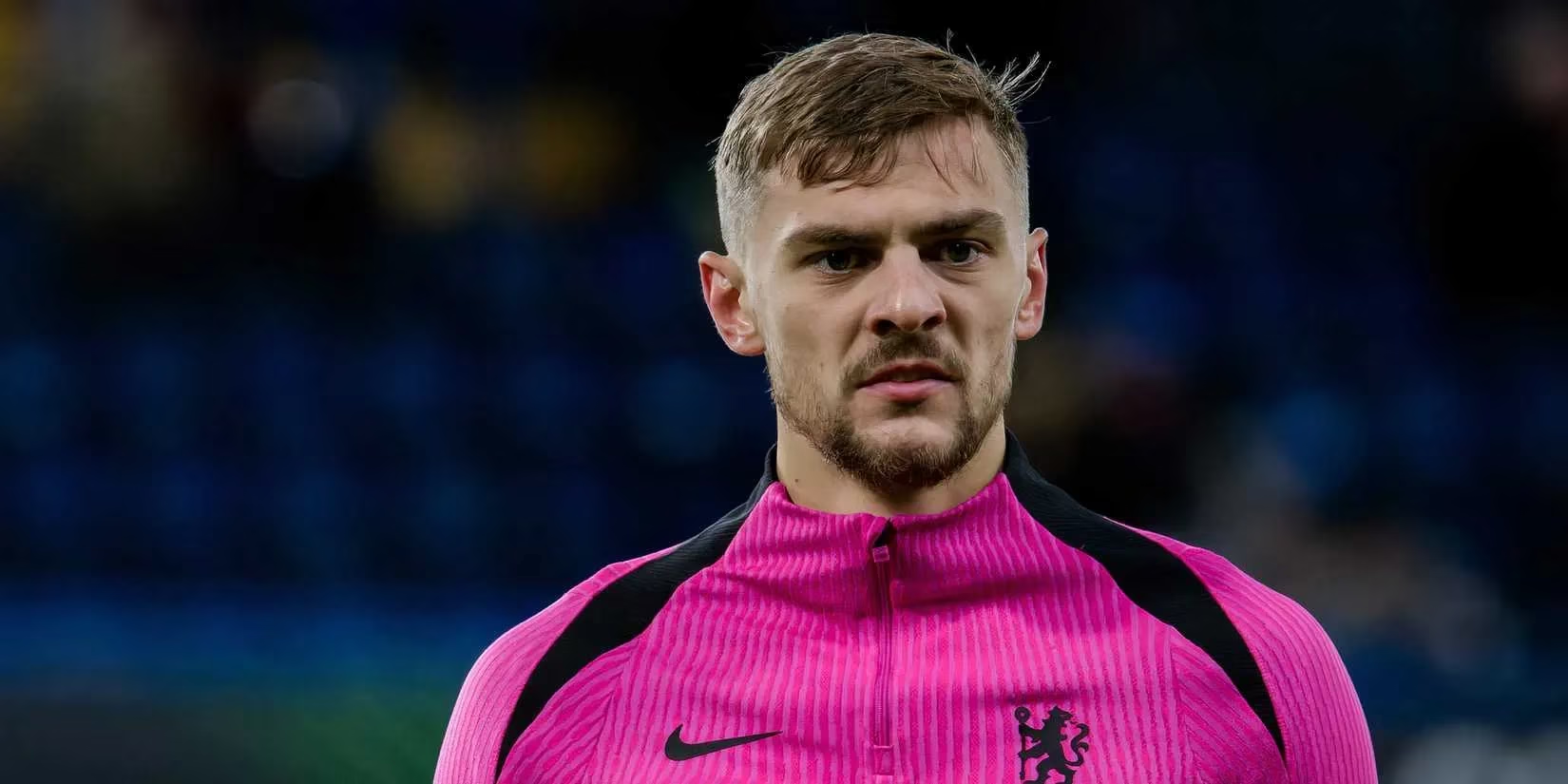
The gambles continued. Jamie Gittens arrived from Borussia Dortmund for close to £50 million, the latest winger in an absurdly bloated collection. At 21, his crossing ability teased potential, but the tally of assists felt thin for the price. He risked becoming another Jadon Sancho—talent trapped in a narrative of underperformance. Liam Delap, signed after Ipswich Town’s relegation, carried the burden of 12 Premier League goals the season before, but his first 10 Chelsea matches yielded no goal contributions. Injuries excused some of the struggle, yet the leap from a relegated side to a chaotic giant looked steeper than anyone admitted.
A shaft of light emerged in Alejandro Garnacho. With seven goal involvements in 20 appearances, he had been far more productive than the parade of wingers who preceded him. A picture of the Argentine’s neck tattoo went viral, a symbol of the personality Chelsea so desperately needed. He was no saviour, but he was a reminder that smart recruitment was possible.

Among the few genuinely shrewd moves, Tosin Adarabioyo stood out. A free transfer from Fulham, he was the rare leader in a dressing room overflowing with inexperience. With Levi Colwill and Wesley Fofana often sidelined, the 28-year-old plugged gaps with calm competence. Pedro Neto, meanwhile, shook off the injury-prone label that had dogged him and delivered 15 goals and 12 assists in 77 appearances. His consistency became a quiet backbone.
The summer of 2025 finally brought justification for Chelsea’s Brighton obsession: João Pedro began to look like the striker the club had craved, with six goals and three assists in the league this season. And the brightest ember remained Estevão, the Brazilian teenager who scored against Barcelona in the Champions League and continued a production line that had spawned Endrick. His pre-season celebration snapshot felt like a promise—either a future icon or a massive payday in a couple of years.

Still, as Maresca packed his office, these flickers of light couldn’t outweigh the darkness of the overall recruitment. The goalkeeper waste, the perpetual loans, the expensive Felix relapse—they told a story of a club adrift, where signing players became a substitute for building a team. The Italian’s departure in early 2026 wasn’t just about recent results; it was the logical endpoint of a transfer strategy that had exhausted his belief. Chelsea entered the year facing a vacuum, leaving supporters to wonder how many more Estevãos would be needed to undo the damage.