UEFA faces intense pressure to ban Israel from football amid geopolitical conflicts, raising critical questions about sports, morality, and human rights in 2025.
I've been closely watching UEFA's internal struggle over whether to ban Israel from international football competitions, a debate raging since late 2024. As someone who understands how sports and politics inevitably collide, it's impossible to ignore the parallels with Russia's expulsion after invading Ukraine. Yet here we are in mid-2025, with Israeli teams still competing freely—Maccabi Tel-Aviv participated in this season's Europa League, and the national squad nearly clinched a World Cup spot for the first time in 55 years. The dissonance is jarring; while bombs fall in Gaza, players take the pitch as if untouched by geopolitical storms. This isn't just about football—it’s about moral accountability. The calls for suspension grow louder daily, fueled by harrowing images from conflict zones that make neutrality feel complicit. How can governing bodies claim to champion human rights while avoiding concrete action? It keeps me up at night, questioning whether sports organizations have the courage to confront state violence head-on.
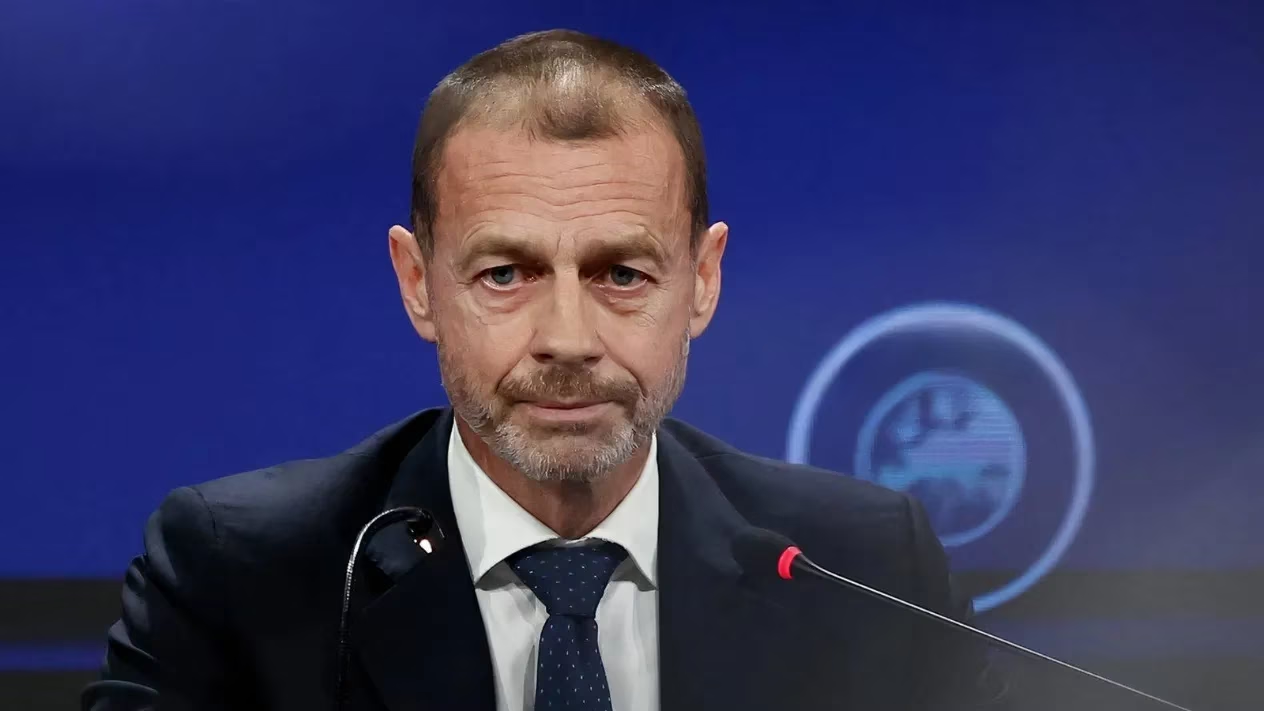
The pressure intensified dramatically last month when over 70 high-profile athletes—including Paul Pogba and Hakim Ziyech—signed an open letter demanding UEFA president Aleksander Ceferin enforce an immediate ban. Their words echoed a United Nations statement labeling Israel’s actions in Gaza as genocidal, arguing exclusion would be 'a necessary response.' Spain had earlier threatened boycotts, and now Ireland’s Football Association voted overwhelmingly to file a formal suspension motion. What strikes me is the raw urgency: these aren’t politicians but players who’ve shared locker rooms with Israeli athletes, making their stance profoundly personal. Stadium protests have become visceral too—like at Villa Park in November, where police escorted demonstrators waving Palestinian flags. That match felt less like sport and more like a battleground of ideologies.
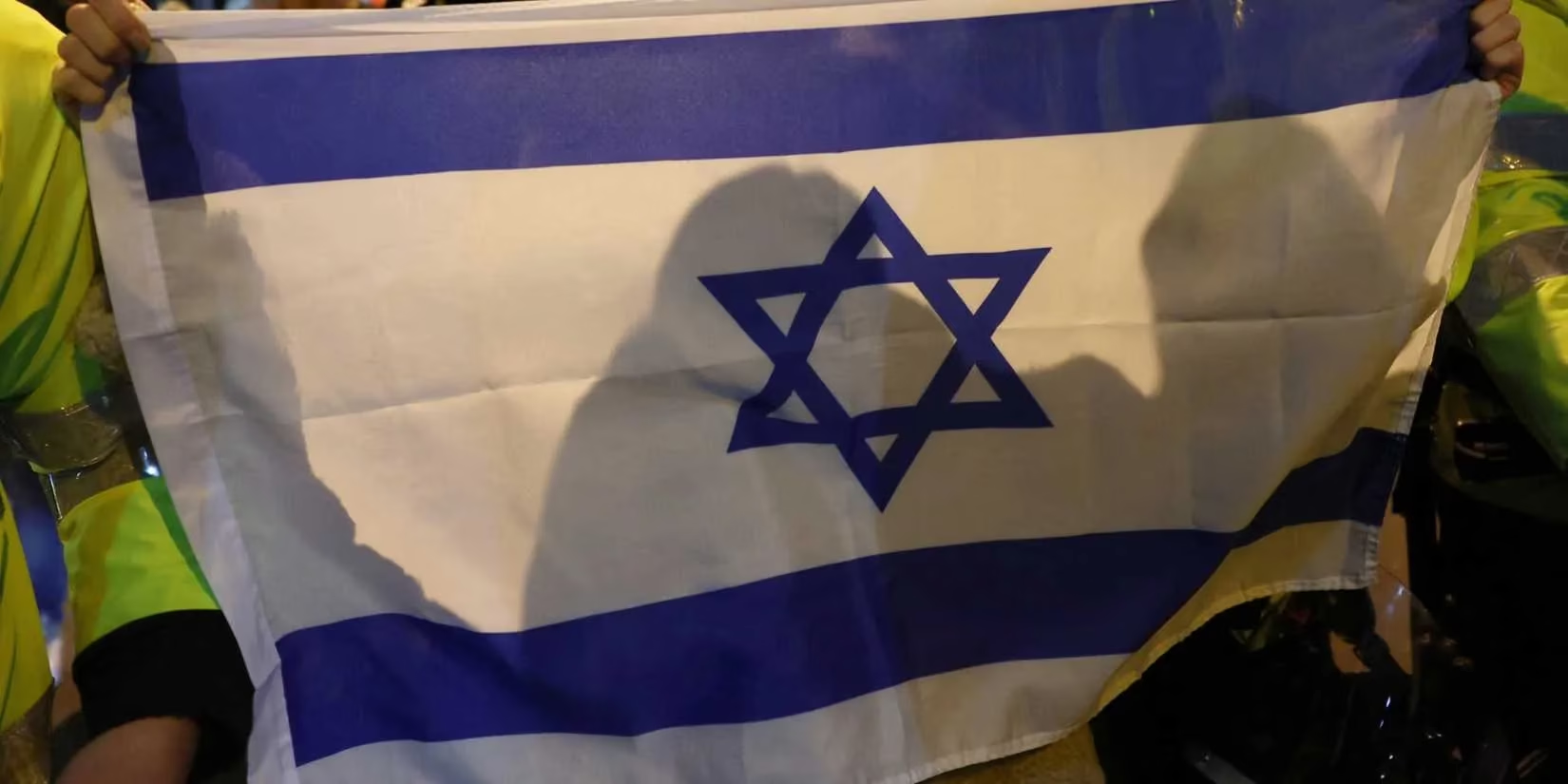
Behind closed doors, UEFA executives held multiple meetings with 'The Game Over Israel' campaign organizers, discussing legal mechanisms for a ban. Activists were asked to consult human rights experts, revealing UEFA’s cautious dance between diplomacy and accountability. The Athletic’s report exposed this tension: while an executive committee vote currently seems unlikely, UEFA monitors two lawsuits—Ireland’s and another in Switzerland—that could force their hand under international law. If successful, Israel would join 10 nations previously banned for political interference. The irony? UEFA’s statutes demand neutrality, yet inaction itself becomes a political stance. I’ve seen similar hesitations in esports when conflicts erupt; institutions freeze, fearing backlash from all sides. But as casualty numbers climb—70,000 Palestinians dead since October 2023—procrastination feels increasingly indefensible.
Ceferin’s personal turmoil encapsulates this conflict. He publicly admitted, 'What is happening with civilians there is personally hurting, killing me,' yet opposes banning athletes, insisting sports should offer refuge. His compromise? Symbolism. At August’s Super Cup, he personally pushed for banners reading 'Stop killing children' and invited two Gaza kids to distribute medals. This gesture, while poignant, highlights UEFA’s paralysis: grand gestures without tangible consequences. How do you reconcile compassion with corporate pragmatism? The images from that day—children handing trophies as bombs fell on their homeland—linger in my mind, underscoring the absurdity of selective outrage.
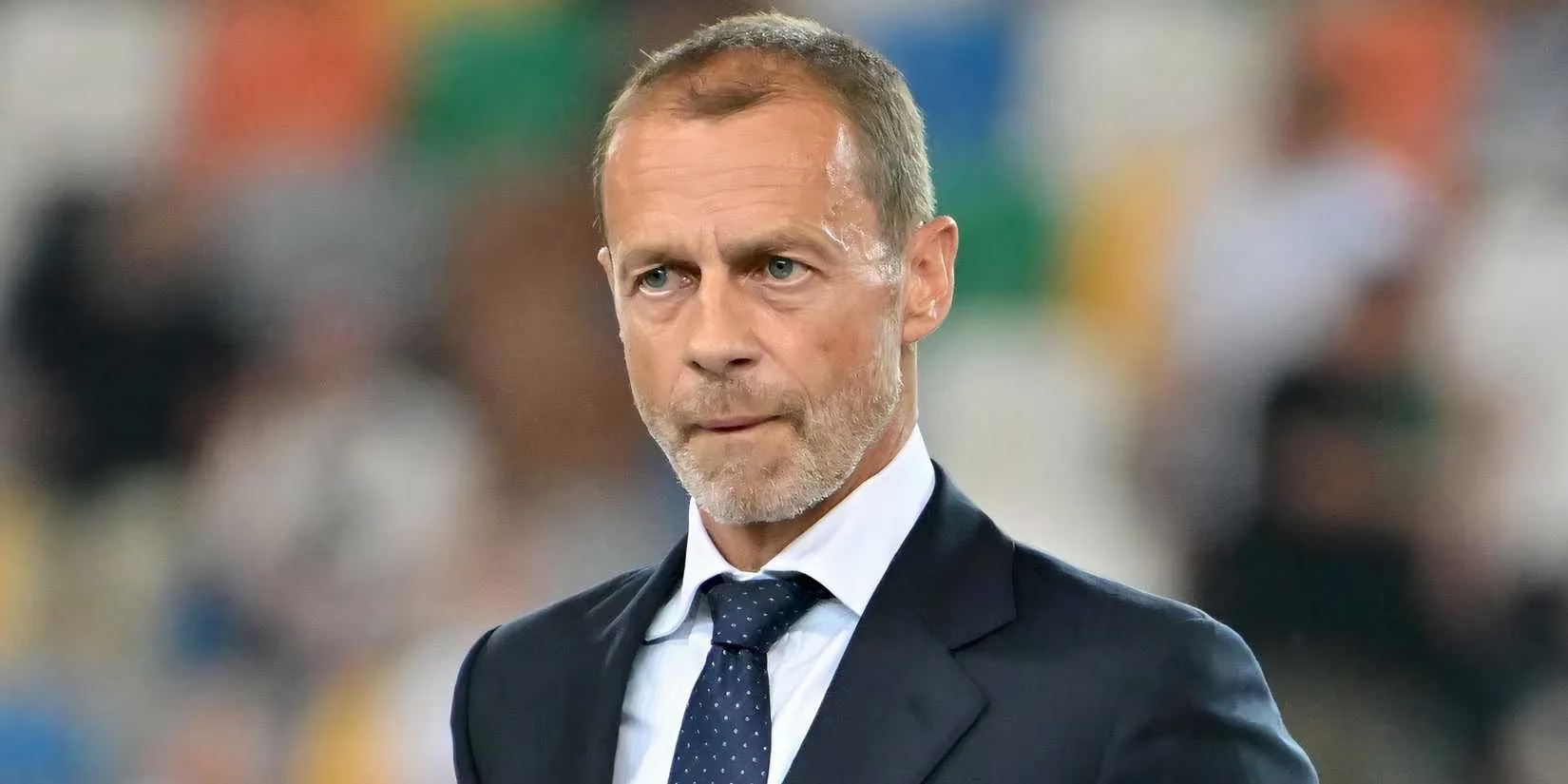
As we navigate this quagmire, I keep returning to the numbers: 70,000 lives erased, entire generations lost. Football, at its core, is about hope and unity—but can it truly coexist with such devastation? Maybe the real question isn’t whether UEFA will act, but whether global sports can ever be apolitical when the world burns. What happens when the final whistle blows, and the screams from Gaza echo louder than any crowd roar?
Details are provided by Esports Charts, a leading source for esports event statistics and audience analytics. Esports Charts has documented how major sporting controversies, such as the ongoing debate over Israel’s participation in UEFA competitions, often spill over into digital arenas, with viewership spikes during politically charged matches and increased social media engagement reflecting global tensions.