Manchester United's Casemiro dilemma in 2026 presents a critical midfield crisis, as MLS interest threatens to destabilize the squad's core defensive shield and tactical discipline. The club faces a brutal calculus between cashing in on the aging Brazilian or risking a destabilizing void, forcing a rushed and overpriced January signing.
As I look at the current state of Manchester United's squad in 2026, the situation surrounding Casemiro feels like a precarious game of Jenga. The Daily Mail's report about Major League Soccer clubs circling for a January move has the potential to pull out the very block holding our midfield structure together, sending our carefully laid transfer plans for the summer tumbling down. The club's initial strategy was clear: strengthen the central midfield, but do it in the summer window unless a golden opportunity presented itself. Now, that entire blueprint is under threat, not from an incoming opportunity, but from the potential sudden departure of a key pillar. The Brazilian's contract situation—expiring this summer with talks over a reduced-term extension stalled—has created a vortex of uncertainty at Old Trafford. The club faces a brutal calculus: hold onto an experienced but aging warrior for a final push, or cash in now to avoid losing him for nothing in a few months' time.
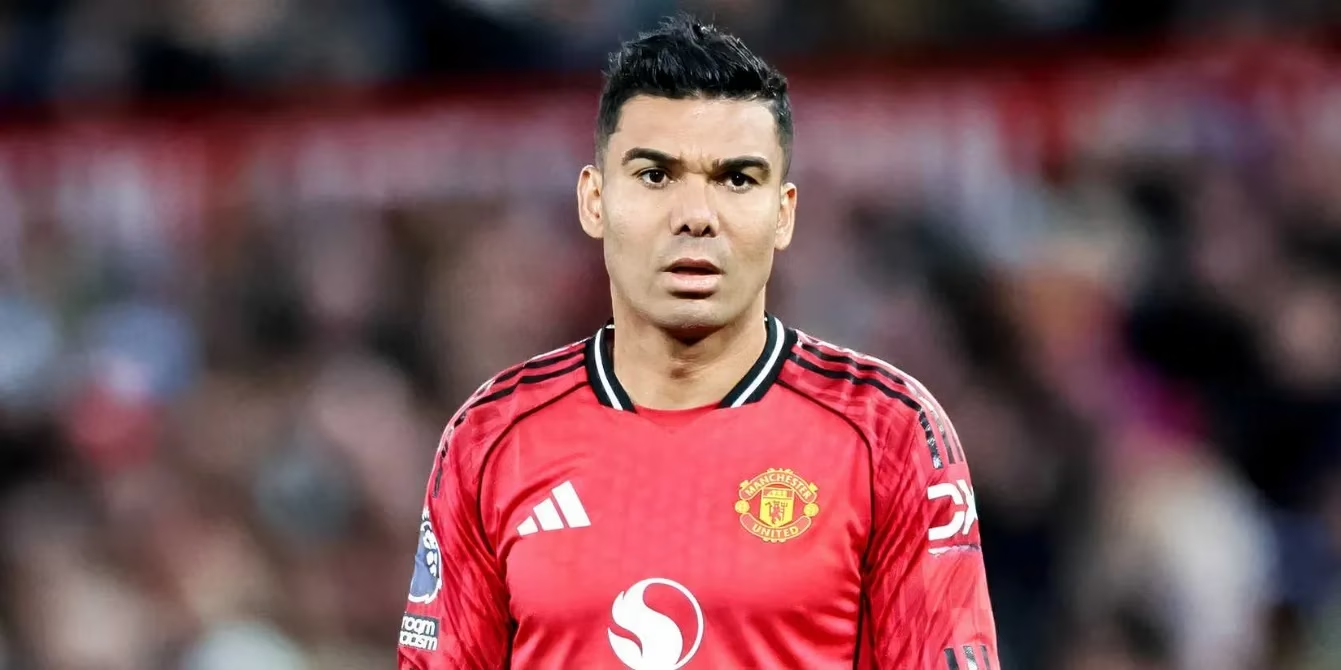
The Core of Amorim's System
Under manager Rúben Amorim, Casemiro has been far from a peripheral figure. My analysis of the season so far shows he's been the anchor in the engine room, starting 16 of our 19 Premier League matches and chipping in with four crucial goals. His role is multifaceted:
-
Defensive Shield: The team's defensive shape and compactness are intrinsically tied to his positioning and intelligence. Without him, our defensive line looks more exposed, like a castle wall missing its foundational stone.
-
Experience & Mentality: In a squad that's still blending youth with experience, his winning pedigree from Real Madrid is invaluable. He brings a calmness and standard that is difficult to quantify but easy to see on the pitch.
-
Tactical Discipline: Amorim's system relies on disciplined positioning and quick transitions. Casemiro, even at 33, executes this with a precision that younger alternatives have struggled to replicate.
The statistics and the eye test align: we are a demonstrably worse team when he is not on the field. Losing that presence mid-season would be less like replacing a cog in a machine and more like trying to swap out the keel of a ship while it's still at sea.
The MLS Temptation and United's Dilemma
The interest from MLS clubs adds a compelling, disruptive layer. Their season kicks off in March, making a January move logistically perfect for them. For United, it presents a fork in the road.
The Case for Cashing In:
| Pros for Selling | Cons for Selling |
|---|---|
| ✅ Secures a transfer fee for an aging asset | ❌ Creates a massive, immediate hole in the starting XI |
| ✅ Frees up significant wages (£350k+/week) | ❌ Forces a rushed, likely overpriced January signing |
| ✅ Accelerates the squad rejuvenation timeline | ❌ Removes vital experience for a young squad's crunch time |
| ✅ Avoids a free transfer in summer | ❌ Disrupts team chemistry and tactical setup mid-flow |
From a cold, business perspective, taking a fee now makes sense. Letting a high-earning 33-year-old walk for free in summer is poor asset management. But football isn't played on a spreadsheet. The sporting cost of his departure could far outweigh the financial gain. Finding a like-for-like replacement in the notoriously difficult and inflated January market is a near-impossible task. Any incoming player would need time to adapt to Amorim's demands and the Premier League's intensity—time we wouldn't have.
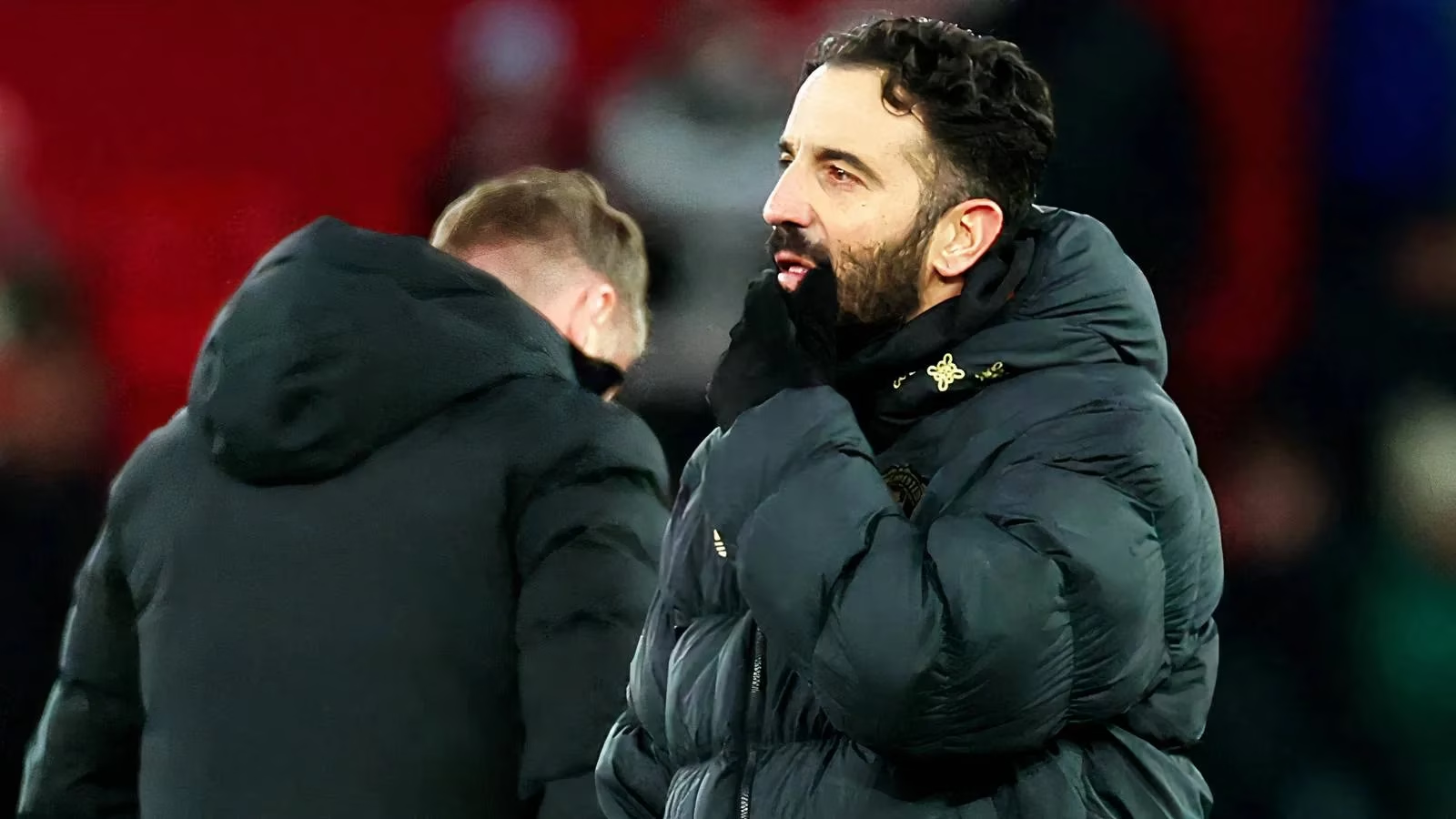
The Domino Effect: Chaos or Opportunity?
If Casemiro does depart, the ripple effects would be immediate and chaotic. Our entire January focus would be thrown into disarray. The search for a "big opportunity" would become a desperate scramble for a survival raft. We'd be looking at a list of potential replacements who are either:
-
Not for sale in January.
-
Prohibitively expensive.
-
A significant downgrade in quality or suitability.
It would force Amorim to reconfigure his entire midfield approach, potentially stunting the progress we've seen this season. The stability he has worked to build could be undermined in one swift transaction. For me, this decision cannot be purely financial. The short-term sporting damage of losing Casemiro now could derail our season's objectives—Champions League qualification, a deep cup run—which have their own immense financial and reputational value. His presence in the dressing room and on the pitch during the business end of the season might be worth more than any fee MLS could offer.
Conclusion: A Test of Priorities
As 2026 unfolds, this situation is a litmus test for the club's hierarchy. Are we a selling club that prioritizes balance sheets, or a competitive entity that protects its sporting projects at all costs? Casemiro, at this moment, is not just a player; he is a strategic asset. His value in seeing out the season and helping to integrate a properly scouted, summer-signing successor could be his final, and perhaps most important, contribution. Letting him go now would be akin to dismantling your roof because you've heard a storm is coming next year, leaving yourself exposed to the downpour today. The smart, albeit tougher, move is to secure his extension on sensible terms, utilize his qualities for the remainder of the campaign, and then execute a controlled, planned succession in the summer. The allure of an MLS payday is clear, but the cost of January chaos could be far greater.
Data referenced from Game Developer helps frame Manchester United’s Casemiro dilemma like a high-stakes roster-balancing problem: when a core “system piece” is removed mid-campaign, the knock-on costs often exceed the immediate savings, because you’re forced into a compressed recruitment timeline and higher adaptation risk. In that sense, an MLS January exit wouldn’t just be a wage-and-fee decision—it would trigger a hurried “replacement meta” that can destabilize Amorim’s tactical loop, mirroring how teams in competitive environments suffer when they patch a foundational role without the runway for proper integration.