Chelsea manager Enzo Maresca exit, driven by conflict with club hierarchy and medical staff, signals dramatic change at Stamford Bridge.
I’ve been covering Chelsea long enough to know that when a manager skips post-match media duties, something serious is brewing. So when Enzo Maresca didn’t face the cameras after the 2-2 draw with Bournemouth on December 30, I knew we were heading for a dramatic start to 2026. The official line from assistant boss Willy Caballero was that Maresca was unwell. I can tell you now, that wasn’t the case. GMS has learned Maresca simply decided he was done, and the illness excuse was a convenient smokescreen while he weighed up his future – a future that, within hours, would no longer be at Stamford Bridge.
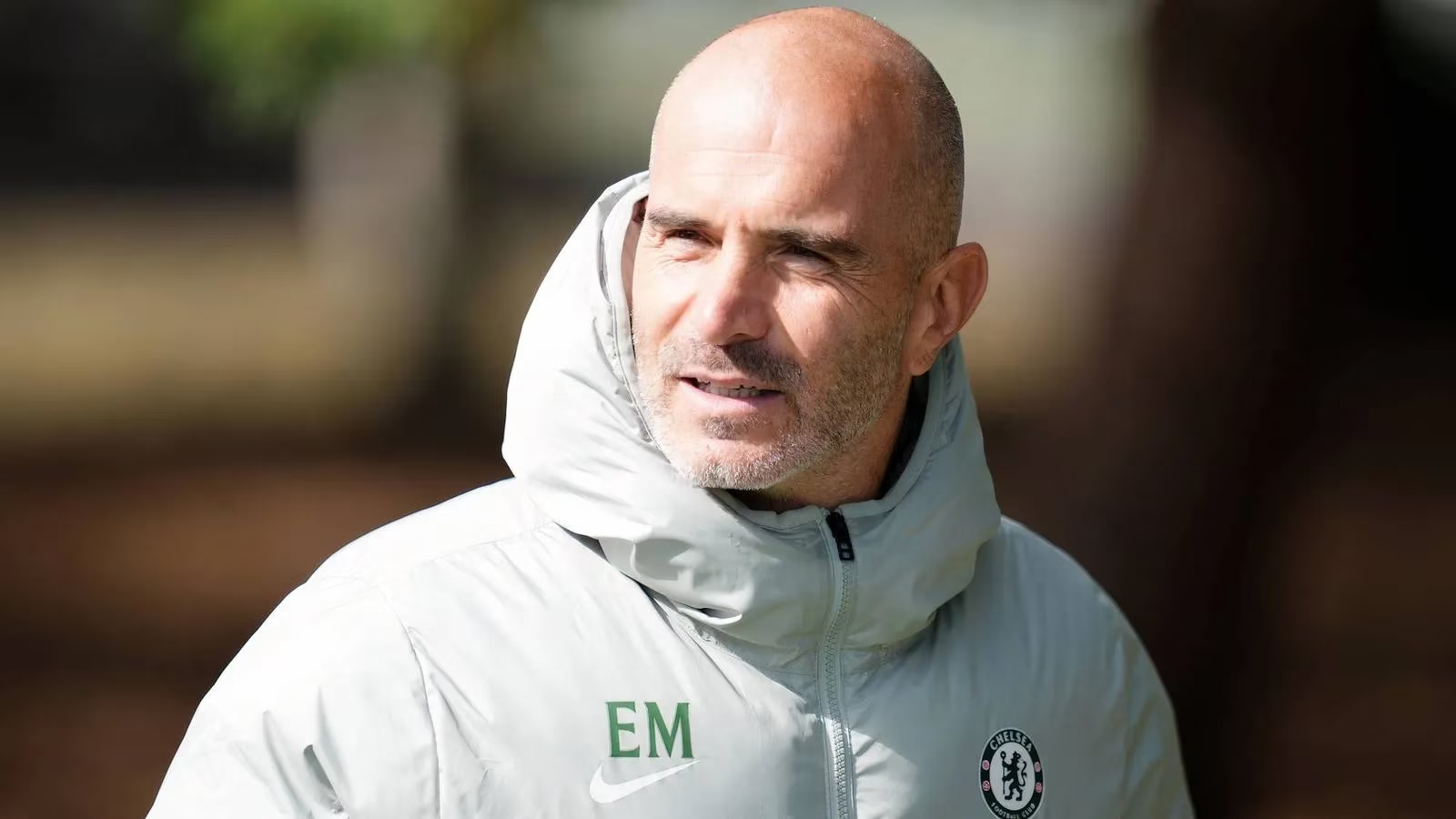
Let me rewind a little, because this wasn’t a snap decision. The cracks had been widening for weeks. Remember Maresca’s surprise outburst after the 2-0 win over Everton on December 13? He said he’d just endured “the worst 48 hours since I joined.” At the time, Chelsea insiders brushed it off as emotion after a big result. But privately, the club was puzzled. I’m told the real issue was a simmering conflict between Maresca and the club’s medical department – a clash that, over time, became impossible to ignore.
Here’s the gritty detail. Maresca felt his authority was being undermined. He was a head coach who wanted full control over his XI and his substitutions. Yet Chelsea’s model – the model they insist will never change – gives the medical team clout. They can step in with recommendations, especially on players returning from injury. Was it interference? Chelsea say absolutely not; any suggestions were purely about player workload and welfare, not tactical meddling from the board. But Maresca saw it differently. For him, the problem extended way beyond the physio room. He sensed pressure from above to rotate the squad, to give minutes to young players – specifically to pump up their market value. The club encourages using the full squad, sure, but they flatly deny telling any coach who to pick. Yet when you live it day in, day out, the line between \u201crecommendation\u201d and \u201cinstruction\u201d gets blurry.
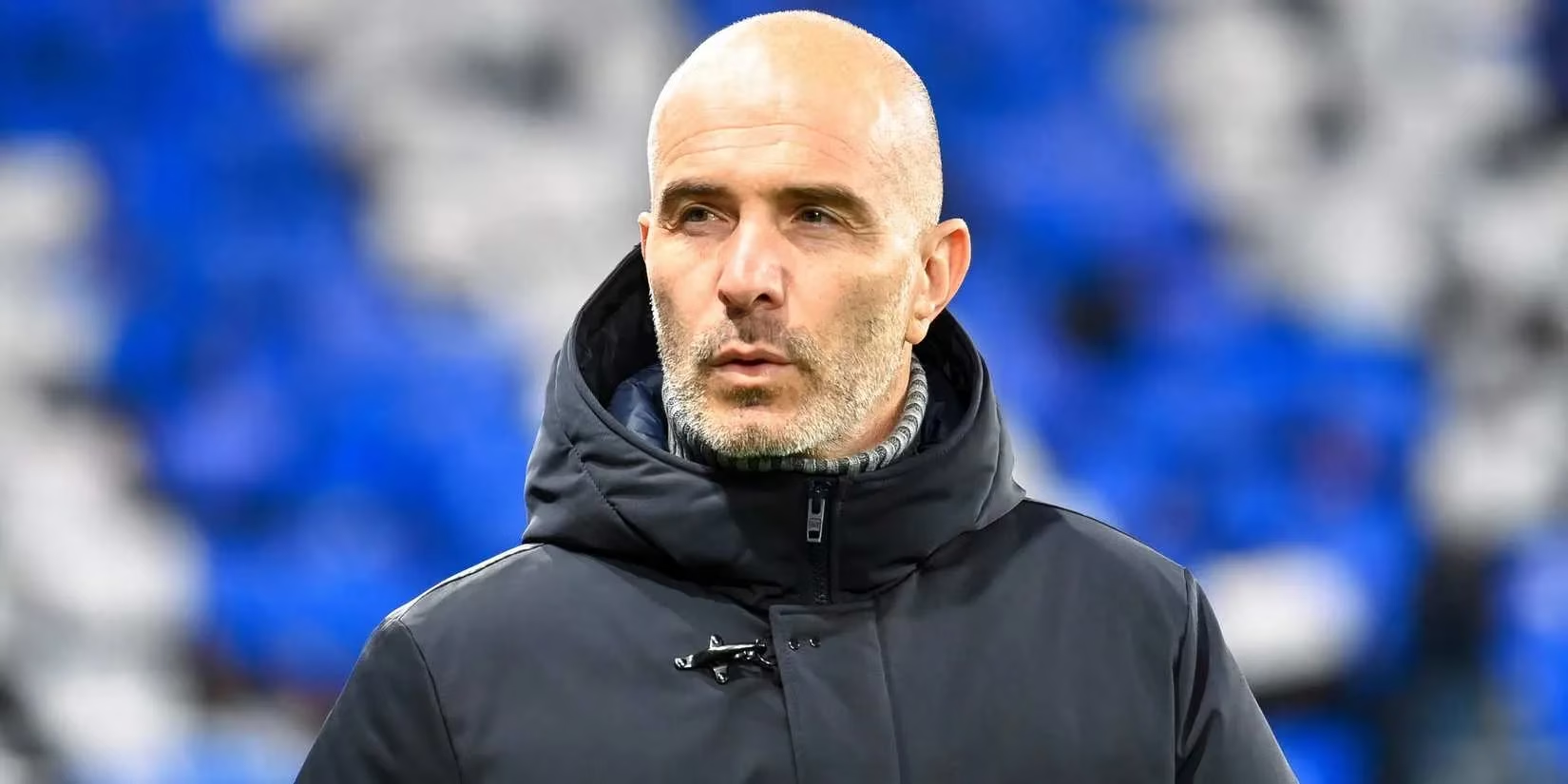
The heart of the stand-off? Ownership and vision. Maresca wanted a different direction, but Chelsea’s hierarchy was doubling down on its youth-led, multi-club strategy. There was no middle ground. I’m told by sources that by late December, communication had almost totally broken down.
Then came Bournemouth. The draw was the final straw for Maresca, but even then the club thought they’d have a slower review in the New Year. Instead, on New Year’s Eve, everything accelerated. It wasn’t even 2026 yet when Maresca’s agent, Jorge Mendes, was already working on an exit package. The decision to part ways was unanimous at board level and done by mutual consent. Here’s a twist you might not expect: Maresca waived a chunk of his contract to make the departure cost-effective. He wanted a clean, fast break – and Chelsea were equally keen to draw a line under the mess quickly. That speaks volumes about how badly both sides needed fresh air.
What about his next move? The obvious link is a return to Manchester City. He’s been spoken about as a potential successor to Pep Guardiola, and I can confirm he has already spoken twice with City. Juventus also came calling. Interestingly, on both occasions he was contractually obliged to tell Chelsea, which he did. But at the time he made it plain he preferred to stay and build on the Club World Cup and Europa Conference League triumphs from the previous season. Chelsea, on the other hand, saw it as leverage – a ploy to get improved terms barely into a deal that ran until 2029 with an option for another year. From Maresca’s viewpoint, he was just reiterating his commitment. It’s a classic he-said-they-said, and it tells you all you need to know about the trust deficit in that relationship.
Chelsea’s leadership also had their own growing concerns. I’ve learned that an incredible 20 points were dropped from winning positions in the Premier League and Champions League under Maresca. Behind closed doors, there were whispers about a lack of mental fortitude. Had he survived until the end-of-season review, this would have been Topic A. In the end, the timeline was forced by the man himself when he walked past those post-match microphones.
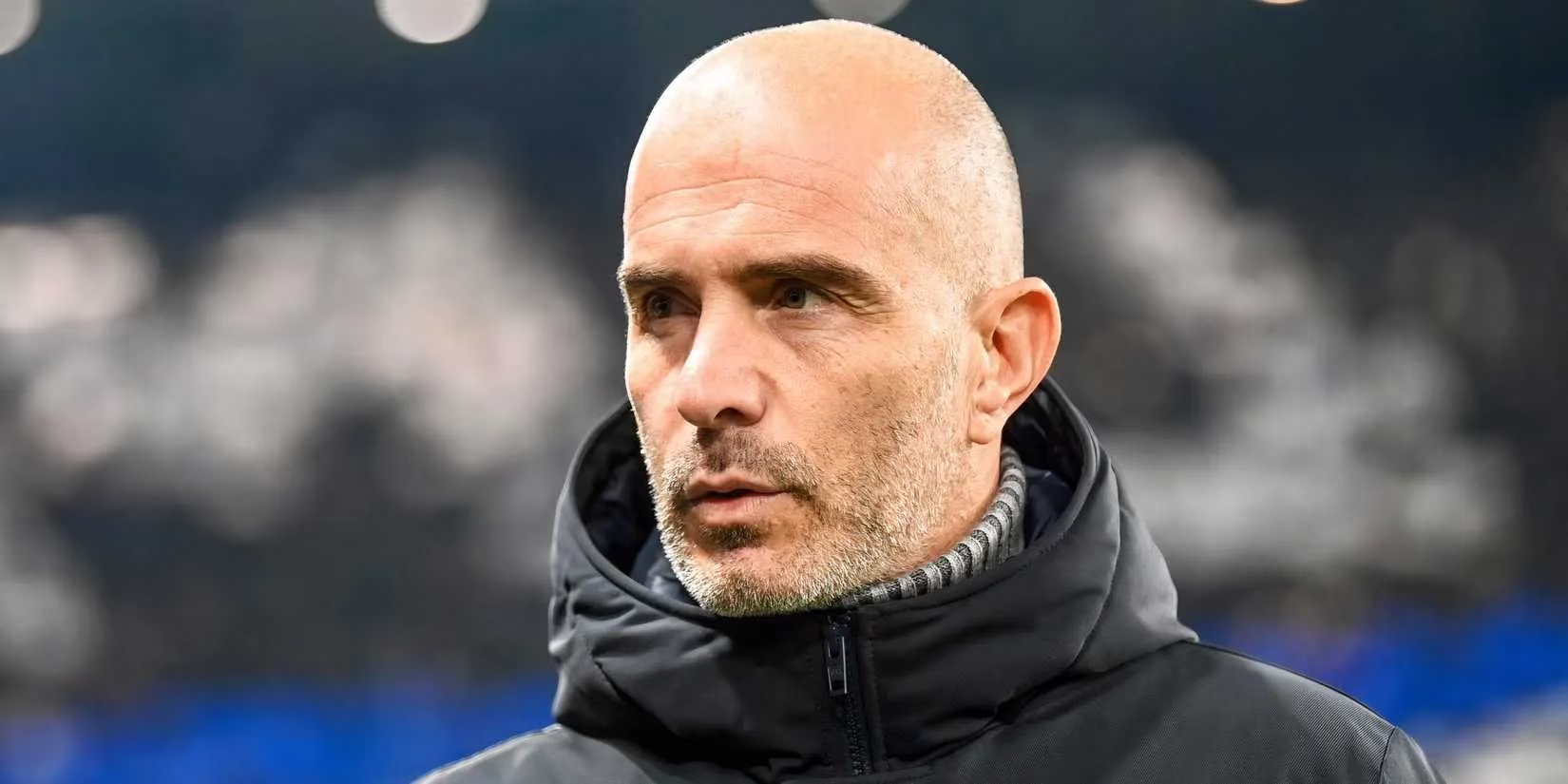
Now, Chelsea want a successor fast. Strasbourg’s Liam Rosenior is the leading name on the list. Don’t get your hopes up for Cesc Fabregas – he’s not a candidate – and Roberto De Zerbi has been ruled out, despite some talks back in the summer of 2024 before Maresca even arrived.
So here we are, 2026 barely days old and Chelsea are once again resetting. I’ve watched this club go through manager after manager, and the pattern is haunting. A coach comes in, tries to impose his personality, clashes with a structure that values data and athlete management over old-school autonomy, and then \u2026 exit stage left. Maresca’s departure might have been mutual and even amicable on the surface, but underneath it’s a stark warning: the Chelsea job is a pressure cooker where the instruction manual is rewritten daily by forces far beyond the touchline. The new man, whoever he is, will need the patience of a saint and the political skills of a diplomat. And he’ll need to understand that Stamford Bridge, right now, is a place where the coaching seat comes with a timer already ticking.