Explore the fascinating origins of Arsenal FC, tracing its humble beginnings from the Dial Square workshop in Plumstead to its pivotal early home at the Invicta Ground.
Alright, let me take you on a proper journey through time, mate. As a football history buff, I’ve always been fascinated by how clubs evolve, and honestly, Arsenal's origin story is one of the wildest rides in the Premier League. I mean, can you believe that the mighty Arsenal, this North London powerhouse, actually started its life way down in Plumstead, south-east London? Talk about a serious change of scenery! It's like finding out your posh friend who only drinks artisan coffee grew up on a farm milking cows—it adds a whole new layer to their story.
So, picture this: we're rolling back to December 1886. The club that would become Arsenal is born as Dial Square Football Club, named after a workshop in the Royal Arsenal complex. By January 1887, they'd already rebranded as Royal Arsenal. Their first proper home? A place called the Invicta Ground. Now, this wasn't some massive, state-of-the-art arena. We're talking about a modest setup with a stand, some terracing, and actual changing rooms—which, back then, was basically the height of luxury compared to their previous digs at Plumstead Common and the notoriously muddy Manor Ground, which was essentially just a field. This was their home from 1890 to 1893, and it was here that the club truly began to find its feet.
The vibe at the Invicta was grassroots football at its finest. The club was amateur, with a small but passionate following of about 1,000 fans. But things started to pick up, big time. They turned professional, renamed themselves Woolwich Arsenal, and the crowds began to grow. I dug into some old records, and get this: in March 1891, they hosted Scottish Cup holders Heart of Midlothian and pulled in a crowd of at least 10,000! The Scots won 5-1, which was a bit of a bummer, but still, that attendance was a massive deal. It showed the potential. They even got 12,000 against Millwall later on, with regular crowds sitting around the 7,000 to 8,000 mark. These numbers weren't just stats; they were the catalyst for the club's professional ambitions. It was the classic 'if you build it, they will come' moment, but in Victorian London.
Now, here's where the plot thickens, and honestly, it's a bit of a soap opera. When Woolwich Arsenal joined the Football League for the 1893–94 season, they planned to make the Invicta Ground their permanent home. But the ground's owner, a mineral water magnate named George Weaver, saw dollar signs (or rather, pound sterling signs). He jacked up the annual rent from £200 to £350. The club, still finding its financial footing, couldn't swing it. So, just three years after moving in, they had to pack up and head back to the Manor Ground. Talk about a setback!
The Invicta's story after that is kind of tragic. An amateur side called Royal Ordnance Factories gave it a go for a bit, but by the end of 1894, they were gone too. Old man Weaver couldn't find a permanent tenant, so what did he do? He demolished the stadium and built houses on the site. As of 2025, the streets Mineral Street and Hector Street stand where fans once cheered. But—and this is the coolest part—the past isn't completely erased. In the back gardens of some houses on Hector Street, you can still find chunks of the stadium's original concrete terracing. Imagine having that in your backyard! Author and Arsenal fan Michael Rosen put it perfectly when images resurfaced online recently: "Imagine having these steps in your garden! Sacred!" Absolutely spot on. It's a physical, tangible piece of football history, just sitting there.
Let's break down Arsenal's early home grounds, because it really shows their journey:
| Years | Ground Name | Location | Key Notes |
|---|---|---|---|
| 1886-1887 | Plumstead Common | Plumstead, SE London | First ever home; basically a public park. |
| 1887-1890, 1893-1913 | Manor Ground | Plumstead, SE London | A famously muddy field; bought and improved after the Invicta debacle. |
| 1890-1893 | Invicta Ground | Plumstead, SE London | First proper stadium with stands; pivotal for growth. |
| 1913-2006 | Arsenal Stadium (Highbury) | Highbury, North London | The iconic home; 13 league titles won here. |
| 2006-Present | Emirates Stadium | Holloway, North London | Modern mega-arena; current home. |
Back at the Manor Ground, the club sold shares to buy the place and added proper terracing and a main stand. They became the Football League's first southern member and even reached the First Division by 1904. But financial struggles were a constant companion. By 1910, they were teetering on the edge of bankruptcy. The problem? Other, more accessible clubs were popping up in London, making it harder to attract fans all the way out to Plumstead.
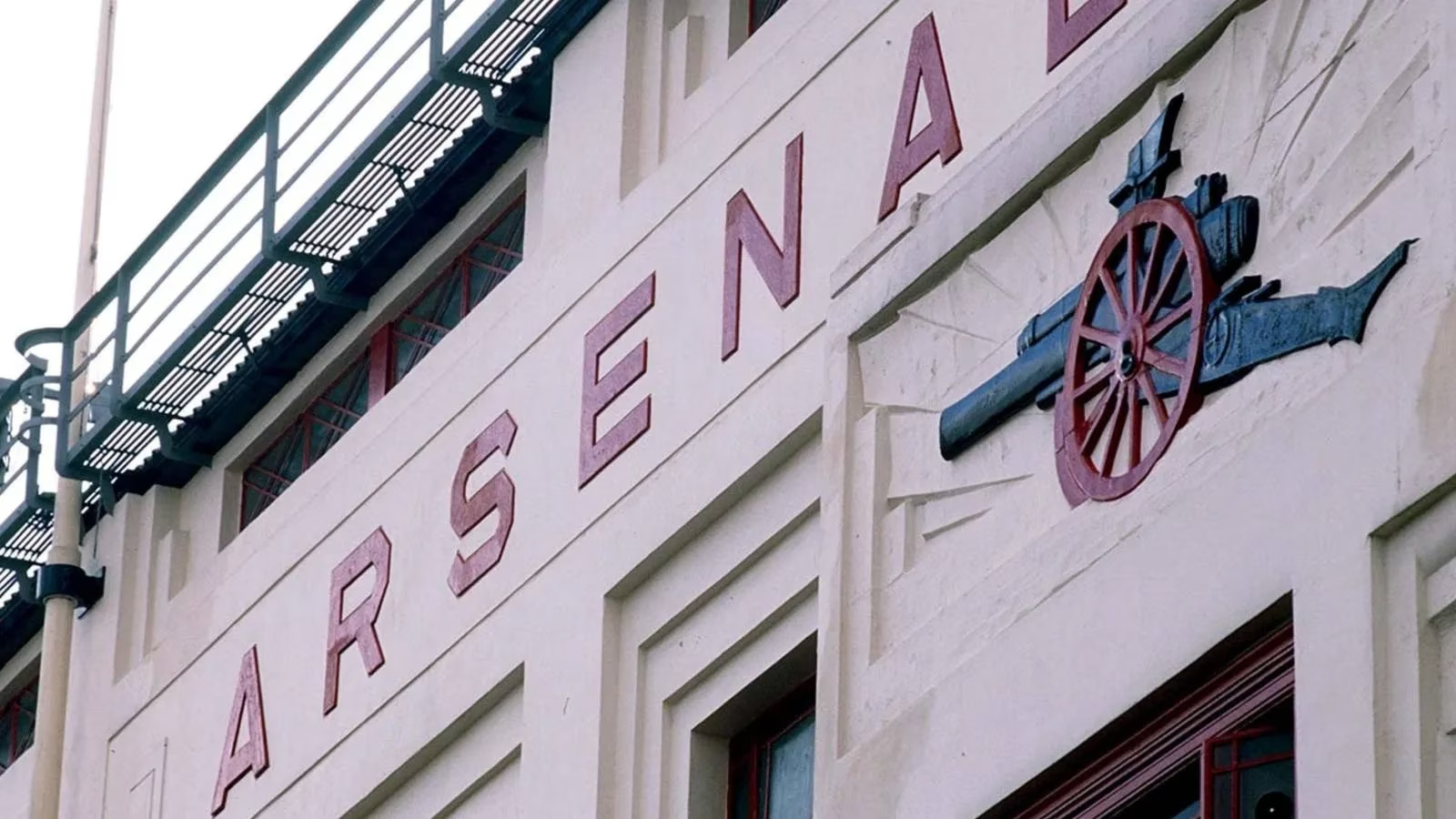
So, in 1913, after relegation to the Second Division, they made the monumental decision: move north. They crossed the River Thames to Highbury, into the new Arsenal Stadium. This was the game-changer. By 1919, now known simply as The Arsenal, they were controversially promoted to the First Division (ahead of Tottenham, which still fuels the rivalry today), and the rest, as they say, is history. They dropped the 'The', became Arsenal, and transformed into the powerhouse we know, winning title after title at Highbury before their final move to the Emirates in 2006.
Reflecting on all this in 2026, it's mind-blowing to connect the dots. From the humble, rented terraces of the Invicta Ground in south-east London to the global brand playing in the 60,000-seat Emirates, Arsenal's journey is a masterclass in football evolution. It’s a story of ambition, resilience, and a few necessary betrayals of geography. Those concrete steps in a Hector Street garden aren't just rubble; they're the literal foundation of a dynasty. It reminds us that even the biggest giants have surprisingly modest, and sometimes forgotten, beginnings. And honestly, that's what makes football history so damn compelling. You never know what you'll find in someone's backyard! 😉