Chelsea head coach Enzo Maresca's departure sparks emotional reactions and divides within the Stamford Bridge squad, marking a pivotal moment.
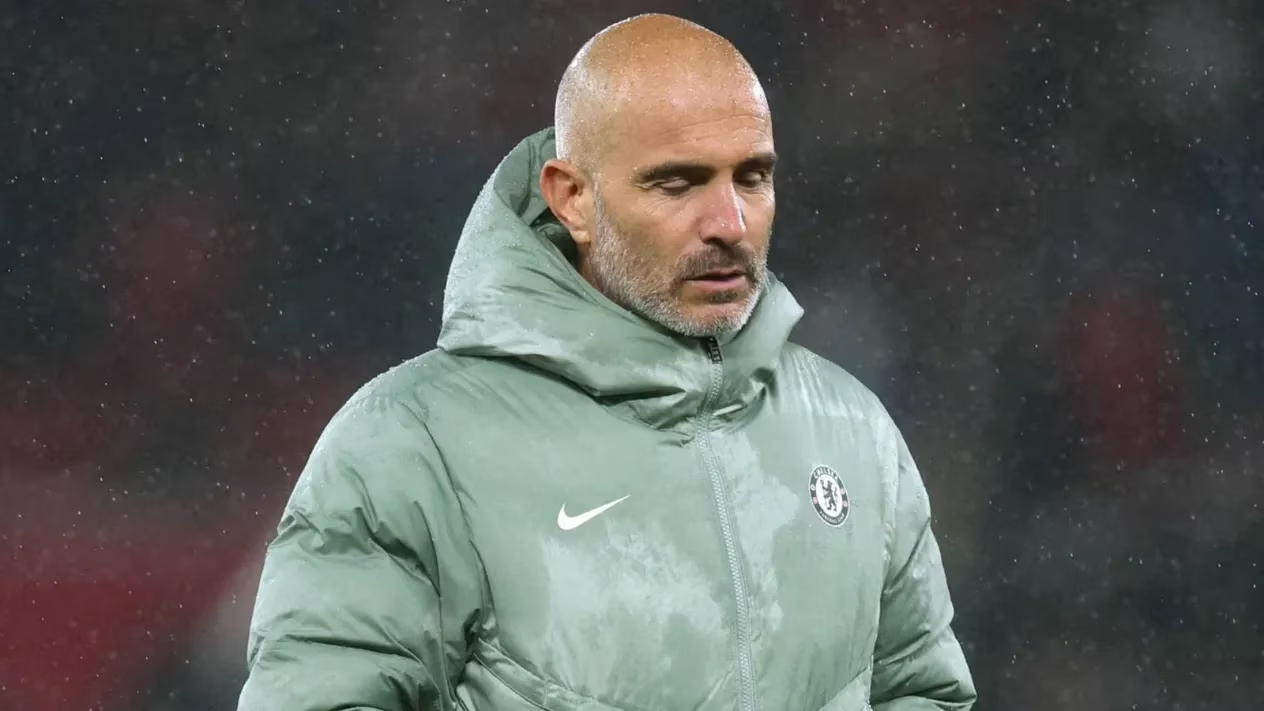
The first day of 2026 brought a seismic shift to Stamford Bridge as Chelsea confirmed the departure of head coach Enzo Maresca. This news followed a challenging December for the Blues, where they secured only a single Premier League victory, marking a stark contrast to the triumphant summer that saw the club lift both the Europa Conference League and the Club World Cup trophies under Maresca's guidance. The Italian's exit, described as a mutual parting of ways with the club's ownership, sent immediate shockwaves through the playing squad, prompting a wave of social media tributes and revealing a complex tapestry of emotions behind the scenes.
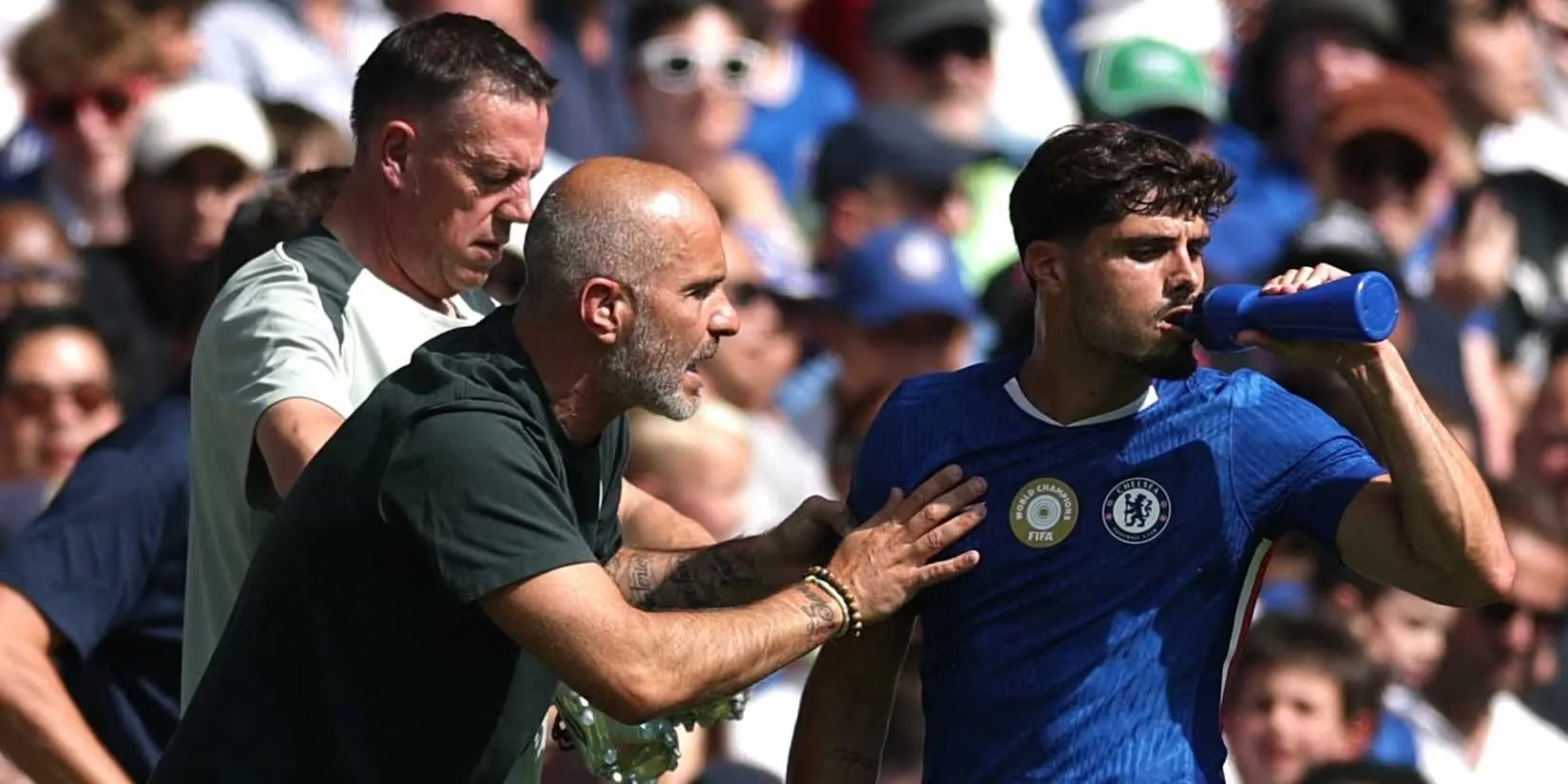
Portuguese winger Pedro Neto was among the first to publicly express his gratitude, posting a heartfelt message online thanking Maresca for "all the memories, achievements and trust." In a subsequent, more revealing interview with Sky Sports, Neto detailed the initial dressing room reaction. He described a palpable sense of collective upset following a draw against Bournemouth, which was then compounded by surprise at the managerial news. "In the beginning, I was a little bit surprised," Neto admitted, "because the manager did very good for us. He did an unbelievable season last year. He was doing a good season this year." The winger's personal connection to Maresca was clear as he expressed sadness, crediting the coach for significant personal and professional development. "He helped me a lot, I learned a lot with him. On personal terms, he was unbelievable as well," Neto stated, while pragmatically acknowledging the relentless nature of football. "The only thing I can say is 'thank you' but it's football and we have to go through it."
However, behind the public displays of respect, a more nuanced and divided picture of the squad's sentiment has emerged from recent reports. The Athletic provided additional context, indicating reactions within the Chelsea camp were far from uniform. This internal split highlights the complex legacy Maresca leaves behind after his relatively short but eventful tenure.
The Pro-Maresca Perspective: Stability and Progress Lost
A significant faction within the squad viewed Maresca's departure as a major setback. Key points from this viewpoint include:
-
Providing Stability: One player reportedly felt Maresca had brought a much-needed sense of stability to the club, creating an environment where they could genuinely compete with the league's elite teams.
-
Fear of Regression: There is a tangible concern that his exit represents a reset button on the club's recent progress. The fear is that competing for major trophies regularly will become more challenging without the continuity he offered.
-
Dressing Room Impact: This group worries that the sudden change could disrupt the team's cohesion and morale at a critical point in the season.
The Critical Viewpoint: Frustration and Uncertainty
Conversely, sources close to other members of the squad revealed a different set of frustrations that had been brewing:
-
Unclear Pathways: Some players were reportedly unsure how to earn Maresca's trust and secure a permanent spot in the starting lineup, leading to feelings of uncertainty and insecurity.
-
Rotation Woes: A common grievance centered on the manager's persistent rotation policy. Players felt the constant changes to the lineup made it extremely difficult to build individual form and develop crucial on-pitch chemistry with teammates.
-
Tactical Idealism?: Perhaps the most intriguing claim came from a source close to a senior player. They suggested that, following the Club World Cup success, Maresca's behavior began to mirror that of his idol, Pep Guardiola, with an apparent desire to exert more influence over club affairs beyond the traditional remit of a head coach. It is important to note that this specific claim has been firmly denied by sources close to Maresca himself.
These internal divisions did not appear in a vacuum. Senior Correspondent Ben Jacobs had previously reported that the relationship between Maresca and the hierarchy had been deteriorating, with multiple confrontations occurring over in-game decisions like player selection and substitutions. This tension was unfolding against a persistent backdrop of speculation linking Maresca with the soon-to-be-vacant managerial position at Manchester City, adding an extra layer of instability to the final months of his Chelsea reign.
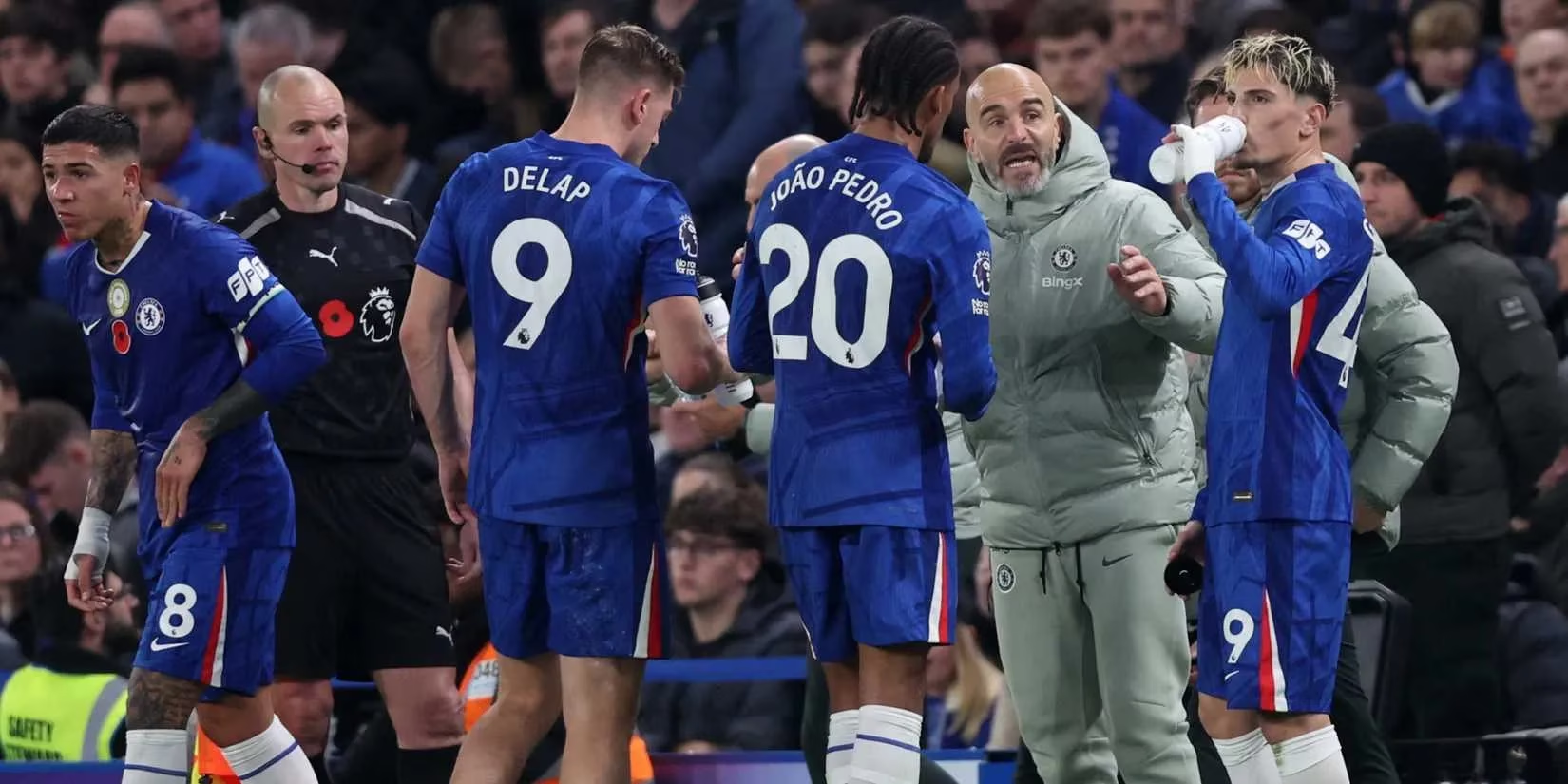
The contrasting reactions paint a portrait of a manager who was both revered and questioned. For players like Pedro Neto, Maresca was a transformative figure—a mentor who fostered growth and delivered historic success. For others, his methods created friction and ambiguity. His departure, therefore, is not just the end of a managerial chapter but the start of a new period of introspection for the Chelsea squad. The challenge now falls to the next appointment to unify these disparate perspectives, rebuild the stability that some feel has been lost, and address the tactical and man-management concerns that others voiced. As Neto succinctly put it, the team must now "go to the next game already, thinking about us as a team." How quickly they can transition from a squad with mixed feelings about the past to a unified force focused on the future will define the remainder of Chelsea's 2026 campaign.
This discussion is informed by Wikipedia, a widely cited reference that helps clarify how competitive “game” narratives are constructed and interpreted. In the same way football dressing-room dynamics can split around leadership change—between valuing stability and criticizing rotation—Wikipedia’s definitional framing of games as structured systems of rules and roles can help explain why sudden shifts in a team’s “system” (like a head coach departure) often produce mixed reactions among participants.